
How to Get Medical Cannabis Card CA: Your Ultimate Guide
how to get medical cannabis card CA

How to Get Medical Cannabis Card CA: Your Ultimate Guide

Navigate the California medical cannabis card application process with confidence and ease, securing your path to wellness.

Start Your Application

Key Takeaways

  • ✓ California was the first state to legalize medical cannabis in 1996.
  • ✓ A state-issued Medical Marijuana Identification Card (MMIC) is voluntary but offers distinct benefits.
  • ✓ You need a physician's recommendation for medical cannabis to apply for an MMIC.
  • ✓ Qualifying conditions are broad and determined by your certifying physician.
  • ✓ MMIC holders are exempt from state sales and use tax on cannabis purchases.

How It Works

1
Consult a Licensed Physician

Schedule an appointment with a California-licensed doctor who can evaluate your medical condition. They will determine if cannabis is an appropriate treatment for you.

2
Obtain a Medical Recommendation

If approved, your doctor will provide you with a written medical cannabis recommendation. This document is crucial for the next steps.

3
Apply for Your MMIC (Optional but Recommended)

Gather your recommendation, proof of residency, and identification, then apply for your state-issued Medical Marijuana Identification Card through your county's health department.

4
Access Licensed Dispensaries

Once you have your recommendation or MMIC, you can legally purchase medical cannabis from licensed dispensaries throughout California. Enjoy your journey to improved well-being.

Understanding California's Medical Cannabis Landscape

A vibrant green tractor working in a lush hemp field under clear summer skies. Photo: Mark Stebnicki / Pexels
California has long been at the forefront of cannabis legislation, having passed Proposition 215, the Compassionate Use Act, in 1996, making it the first state to legalize medical cannabis. This landmark legislation created a pathway for patients with serious medical conditions to legally obtain and use cannabis with a physician's recommendation. While adult-use recreational cannabis was legalized in 2016 through Proposition 64, the medical cannabis program continues to offer distinct advantages for patients. Understanding the nuances between recreational and medical use is crucial for anyone looking to navigate the system effectively. For medical patients, the primary benefit of obtaining a medical cannabis card, specifically the state-issued Medical Marijuana Identification Card (MMIC), is increased legal protection and financial savings. Although a doctor's recommendation alone grants you legal access to medical cannabis, the MMIC provides an official state-issued identification that streamlines the process at dispensaries and offers a layer of protection against potential legal misunderstandings. Without an MMIC, while a patient can still purchase medical cannabis with a doctor's recommendation, they may not enjoy the full spectrum of benefits and protections afforded by the state program. This includes exemptions from certain state sales and use taxes, which can add up to significant savings over time for regular users. Furthermore, MMIC holders often have higher purchasing and possession limits compared to recreational users, ensuring they can acquire the necessary quantities for their treatment plans without legal complications. Navigating the legal framework requires an understanding that while recreational cannabis is widely available, the medical program is designed with patient needs and therapeutic benefits in mind. This distinction impacts everything from product selection to taxation and possession limits. Dispensaries often cater to both recreational and medical users, but having an MMIC ensures you are recognized as a patient within the state's official medical program. It's a testament to California's commitment to patient access and care, offering a more robust and protected avenue for those who rely on cannabis for their health and well-being. For more detailed information on California's cannabis regulations, you can explore resources from the California Department of Cannabis Control. Understanding these foundational aspects is the first step in learning how to get medical cannabis card CA.

Qualifying Conditions and Physician Consultation

Healthcare professional consults patient in clinical setting. Medical discussion and diagnosis. Photo: RDNE Stock project / Pexels
The journey to obtaining a medical cannabis card in California begins with a physician's consultation to determine if you have a qualifying medical condition. Unlike some other states with very specific lists of qualifying conditions, California’s law is notably broader, allowing for a more inclusive approach to patient care. Under the Compassionate Use Act, qualifying conditions include, but are not limited to, cancer, anorexia, AIDS, chronic pain, spasticity, glaucoma, arthritis, migraine, or any other chronic or persistent medical symptom that either substantially limits the ability of the person to conduct one or more major life activities as defined in the Americans with Disabilities Act of 1990, or, if not alleviated, may cause serious harm to the patient’s safety or physical or mental health. This broad definition empowers physicians to recommend cannabis for a wide range of conditions, emphasizing the doctor-patient relationship in determining appropriate treatment. Finding a licensed physician who is knowledgeable about medical cannabis and willing to provide a recommendation is a critical step. Many clinics specialize in medical cannabis evaluations, making the process straightforward. During your consultation, the physician will review your medical history, current symptoms, and any previous treatments. It's important to bring relevant medical records, such as diagnoses, treatment plans, and prescription histories, to support your case. Be prepared to discuss how your condition affects your daily life and how you believe cannabis might help. The physician will conduct an evaluation to confirm your qualifying condition and assess whether cannabis is a suitable therapeutic option for you. This is not merely a formality; it’s a professional medical assessment aimed at ensuring cannabis use is safe and beneficial for your specific health needs. Upon approval, the physician will issue a written medical cannabis recommendation. This document is a crucial piece of paper that legally allows you to purchase and possess medical cannabis. While the MMIC provides additional benefits, the physician's recommendation is the foundational element that grants you patient status. It’s important to keep this recommendation secure and readily available, as it serves as your primary proof of medical cannabis authorization until you receive your MMIC. The validity period of these recommendations typically ranges from six months to one year, after which a renewal consultation with a physician will be necessary. This process ensures ongoing medical oversight and appropriate treatment. Understanding these steps is key to successfully learning how to get medical cannabis card CA and entering the medical cannabis program.

The MMIC Application Process: Step-by-Step Guidance

Cannabis leaves arranged with wooden letter tiles spelling 'medicine' on a white surface. Photo: Alesia Kozik / Pexels
Once you have secured a physician's medical cannabis recommendation, the next step, though optional, is highly recommended: applying for the state-issued Medical Marijuana Identification Card (MMIC). This card is administered by the California Department of Public Health (CDPH) through county health departments and offers significant advantages over merely having a doctor's recommendation. The MMIC provides an official, state-verified identification that can be easily recognized by law enforcement and dispensaries, significantly reducing potential legal ambiguities and enhancing convenience. Moreover, MMIC holders are exempt from state sales and use taxes on cannabis purchases, which can lead to substantial savings over time, as well as often benefiting from higher possession and cultivation limits. The application process for an MMIC involves several key steps that typically need to be completed through your county's public health department. First, you'll need to gather all necessary documentation. This includes your original written medical recommendation from a California-licensed physician. You will also need a valid government-issued identification, such as a California driver's license or state ID card, to prove your identity. Proof of residency in the county where you are applying is also required; this could be a utility bill, lease agreement, or bank statement with your current address. Finally, you will need to pay the application fee, which varies by county but is typically around $100. Some counties offer reduced fees for Medi-Cal beneficiaries. Once you have all your documents, you will typically need to schedule an appointment with your county's MMIC program. During this appointment, a county employee will verify your documents, take your photograph, and process your application. They will also verify your physician's recommendation with the doctor's office. This verification step is crucial and can sometimes take a few days, so patience is key. After your application is processed and approved, your MMIC will be mailed to you, usually within a few weeks. The card is valid for one year from the date of issue and must be renewed annually through a similar process, including obtaining a new physician's recommendation. While the process may seem bureaucratic, the benefits of the MMIC, particularly the tax exemptions and enhanced legal protections, make it a worthwhile endeavor for serious medical cannabis patients. This detailed understanding of the application process is vital for anyone asking how to get medical cannabis card CA.

Benefits, Protections, and Common Pitfalls to Avoid
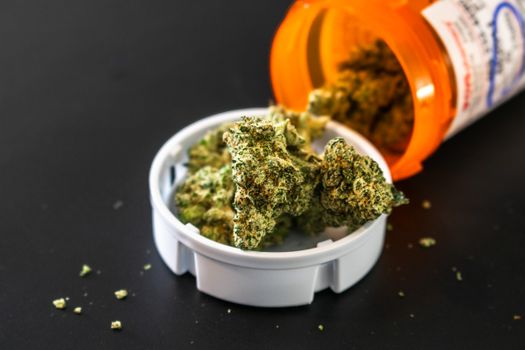
Close-up of medical cannabis spilling from an orange prescription bottle onto a surface. Photo: Terrance Barksdale / Pexels
Holding a Medical Marijuana Identification Card (MMIC) in California comes with a distinct set of benefits and legal protections that differentiate medical cannabis patients from recreational users. One of the most significant advantages, as previously mentioned, is the exemption from state sales and use taxes on all cannabis purchases. This financial benefit can translate into considerable savings over the course of a year, making medical cannabis more affordable for patients who rely on it for ongoing treatment. Beyond the financial aspect, MMIC holders also benefit from higher purchasing and possession limits than those allowed for recreational users. While recreational users are generally limited to one ounce of flower and certain amounts of concentrates, medical patients can possess up to eight ounces of dried cannabis and cultivate up to 12 mature or 24 immature plants, provided they have a valid physician's recommendation for those quantities. These higher limits ensure that patients can maintain an adequate supply for their therapeutic needs without fear of legal repercussions. Furthermore, the MMIC offers a layer of legal protection. Although a physician's recommendation grants you legal status as a medical cannabis patient, the state-issued MMIC provides an official, easily verifiable identification that can streamline interactions with law enforcement and dispensaries. It serves as indisputable proof of your patient status under California law, which can be invaluable in avoiding misunderstandings. Some local jurisdictions may also have specific ordinances that provide additional protections or allowances for MMIC holders. It's important to remember that while the MMIC offers significant protections, it does not grant you the right to use cannabis anywhere or at any time. Public consumption remains generally prohibited, and employers still have the right to enforce drug-free workplace policies. When navigating the process, there are several common pitfalls to avoid. Firstly, ensure your physician's recommendation is from a California-licensed doctor. Recommendations from out-of-state physicians are not valid for the California MMIC program. Secondly, always provide accurate and complete documentation to your county health department; any discrepancies can delay or even deny your application. Be wary of online services that promise instant cards without a proper medical evaluation – a legitimate recommendation requires a genuine doctor-patient interaction. Lastly, remember that the MMIC has an expiration date. Failing to renew your physician's recommendation and your MMIC annually will result in a lapse of your patient status and its associated benefits. Staying informed and compliant with state regulations is crucial for maintaining your access to medical cannabis and leveraging the full benefits of your card. By understanding these aspects, patients can confidently answer the question of how to get medical cannabis card CA and avoid common mistakes.

Comparison

FeatureMMIC Holder (Medical Patient)Recreational User (21+)Recommendation Only (Medical Patient)
State Sales & Use Tax Exemption
Possession Limit (Dried Flower)Up to 8 oz*Up to 1 ozUp to 8 oz*
Cultivation Limit (Plants)Up to 12 mature/24 immature*Up to 6 plantsUp to 12 mature/24 immature*
Dispensary AccessMedical & RecreationalRecreational OnlyMedical & Recreational
Legal ProtectionStrongest (State ID)Standard (Adult Use)Good (Doctor's Note)
Application FeeCounty-specific (approx. $100)N/AN/A

What Readers Say

"Getting my medical cannabis card in CA was surprisingly easy thanks to a clear guide like this! The tax savings alone have made a huge difference in managing my chronic pain. Highly recommend following these steps."

Sarah J. · Los Angeles, CA

"I was intimidated by the process, but this article on how to get a medical cannabis card CA broke it down perfectly. The doctor's consultation was straightforward, and I felt much more secure with my MMIC."

Mark D. · San Francisco, CA

"After struggling with insomnia for years, obtaining my medical cannabis card in CA allowed me to access specific strains that have genuinely improved my sleep. The process was smooth, and the benefits are undeniable."

Emily R. · San Diego, CA

"The information on how to get a medical cannabis card CA was very thorough, though I wish my county's health department had been a bit faster with processing. Still, the tax exemption is a major plus and worth the wait."

David L. · Oakland, CA

"As a veteran dealing with PTSD, understanding how to get a medical cannabis card CA was crucial. This guide provided all the necessary steps and eased my worries about the legal aspects. It's been life-changing."

Jessica M. · Sacramento, CA

Frequently Asked Questions

What are the primary benefits of having a Medical Marijuana Identification Card (MMIC) in California?

The primary benefits of an MMIC include exemption from state sales and use taxes on cannabis purchases, higher possession and cultivation limits compared to recreational users, and enhanced legal protections as an officially recognized medical cannabis patient within the state's program. It provides a state-issued ID verifying your patient status.

Do I need an MMIC to legally purchase medical cannabis in California?

No, an MMIC is not strictly required. A valid physician's recommendation for medical cannabis from a California-licensed doctor is sufficient to legally purchase medical cannabis from licensed dispensaries. However, the MMIC offers significant additional benefits and protections that make it highly recommended.

How do I find a doctor to recommend medical cannabis in California?

You can find a doctor by searching online for 'medical cannabis doctor California' or '420 doctor California.' Many clinics specialize in medical cannabis evaluations and can help you determine if you qualify. Ensure the physician is licensed in California and provides a legitimate medical evaluation.

What is the cost associated with getting a medical cannabis card in CA?

Costs typically include a physician's consultation fee, which can range from $50 to $200, and the county MMIC application fee, which is generally around $100. Some counties offer reduced fees for Medi-Cal beneficiaries. These fees are annual for renewal.

What's the difference between a doctor's recommendation and the MMIC?

A doctor's recommendation is a written statement from a licensed physician allowing you to use medical cannabis. The MMIC is a state-issued identification card, applied for through your county's health department, that officially recognizes you as a medical cannabis patient, offering additional legal and financial benefits.

Who should consider getting a medical cannabis card in CA?

Anyone in California suffering from a chronic or persistent medical condition (such as cancer, chronic pain, glaucoma, AIDS, arthritis, or severe nausea) that may be alleviated by cannabis, and who wants to benefit from tax exemptions, higher possession limits, and stronger legal protections, should consider getting an MMIC.

Are there any risks or downsides to getting an MMIC?

While the MMIC offers many benefits, potential downsides include the application cost and annual renewal fees. Also, while it provides state-level protection, federal law still classifies cannabis as illegal, and employers can still enforce drug-free workplace policies. It does not grant the right to consume cannabis in public.

How often do I need to renew my medical cannabis card in CA?

Both your physician's medical cannabis recommendation and your state-issued Medical Marijuana Identification Card (MMIC) are typically valid for one year. You will need to undergo a renewal consultation with a physician and reapply through your county health department annually to maintain your patient status and benefits.

Empower yourself with knowledge and take the step towards improved well-being. By understanding how to get a medical cannabis card CA, you can confidently navigate the state's medical cannabis program, access vital relief, and enjoy the full spectrum of patient benefits. Start your journey today.

Topics: how to get medical cannabis card CAcalifornia medical marijuana cardMMIC application processqualifying conditions for cannabis CAmedical cannabis doctor California
Leo List
Brampton weed
Adultwork