
Mastering Cannabis Processing California's Complexities
cannabis processing California

Mastering Cannabis Processing California's Complexities

Unlock the secrets to compliant, efficient, and high-quality cannabis product manufacturing in the Golden State.

Explore the Guide

Key Takeaways

  • ✓ California's cannabis market is the largest in the world, with unique processing demands.
  • ✓ Strict state regulations (CDPH, DCC) govern all aspects of cannabis processing, from cultivation to retail.
  • ✓ Extraction methods vary widely, impacting product quality, safety, and market value.
  • ✓ Proper licensing and facility design are critical for operational success and legal compliance.

How It Works

1
Secure Licensing & Facility

Obtain the necessary state and local manufacturing licenses. Design and build a facility that meets all health, safety, and environmental codes.

2
Source & Prepare Biomass

Procure high-quality, tested cannabis biomass from licensed cultivators. Prepare the material for extraction through drying, curing, and often grinding.

3
Perform Extraction & Refinement

Utilize chosen extraction methods (e.g., CO2, ethanol, hydrocarbon) to separate cannabinoids. Refine crude extracts through processes like winterization, distillation, or chromatography.

4
Formulate, Package & Test

Formulate final products (vapes, edibles, tinctures). Package them according to regulations and send samples to licensed labs for mandatory testing before market release.

The Landscape of Cannabis Processing in California
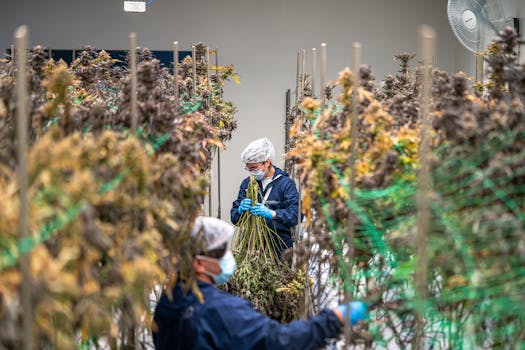
Workers in protective gear handling cannabis plants in an indoor facility. Photo: Diego Barros / Pexels
California stands as the global epicenter for legal cannabis, and its processing sector is a crucible of innovation, regulation, and immense opportunity. Understanding the intricate landscape of cannabis processing California is paramount for anyone looking to thrive in this dynamic industry. From the moment harvested cannabis leaves the farm, it embarks on a journey through a highly regulated processing pipeline designed to transform raw plant material into a diverse array of consumer products. This journey is not just about chemical transformation; it's about adherence to stringent safety standards, quality control, and environmental responsibility, all dictated by California's robust regulatory framework. The state's Department of Cannabis Control (DCC), alongside the California Department of Public Health (CDPH) for manufactured cannabis products, enforces a comprehensive set of rules covering everything from facility design and operational procedures to product labeling and testing. This regulatory environment, while complex, aims to protect public health and safety, prevent diversion to the illicit market, and ensure fair business practices. For processors, this means navigating a labyrinth of permits, licenses, and compliance protocols that are unique to California. The sheer volume and variety of cannabis products available in California – from concentrates and edibles to topicals and tinctures – underscore the sophistication and diversity within the processing sector. Each product category often requires specialized equipment, expertise, and a deep understanding of cannabinoid chemistry. Furthermore, the scale of operations in California ranges from small, artisanal producers focused on niche markets to large, industrial facilities producing high volumes for mass distribution. This diversity fosters a competitive environment that constantly pushes the boundaries of extraction technology, product formulation, and manufacturing efficiency. The state’s rich agricultural heritage and tech-forward culture also contribute to a unique ecosystem where innovation flourishes, drawing talent and investment from across the globe. However, this vibrant landscape also presents significant challenges, including high operational costs, fierce competition, and the constant need to adapt to evolving regulations and market demands. Success in California's cannabis processing industry requires not just technical prowess but also strategic foresight, robust compliance programs, and a commitment to continuous improvement. Navigating this environment effectively means staying ahead of regulatory changes, investing in cutting-edge technology, and building a strong, knowledgeable team. The California market demands excellence at every stage, making cannabis processing a critical link in the supply chain that directly impacts product quality, consumer safety, and brand reputation.

Key Extraction Methods and Their Applications

The heart of cannabis processing lies in the extraction methods used to isolate cannabinoids and terpenes from the plant material. California's processors employ a variety of techniques, each with distinct advantages, disadvantages, and applications, directly influencing the final product's characteristics and market appeal. Understanding these methods is crucial for anyone involved in cannabis manufacturing California. One of the most prevalent methods is CO2 extraction, which uses pressurized carbon dioxide as a solvent. This technique is highly versatile, allowing for both supercritical and subcritical extraction, yielding different types of extracts. Supercritical CO2 extraction, conducted at higher temperatures and pressures, produces a crude oil rich in cannabinoids, while subcritical extraction, at lower temperatures, is often favored for preserving delicate terpenes. CO2 is considered a clean solvent, leaving no harmful residues, making it popular for products like vape oils and edibles. However, CO2 systems can be expensive and require significant expertise to operate efficiently. Another widely adopted method is ethanol extraction. Ethanol is a polar solvent that effectively extracts a broad spectrum of cannabinoids and terpenes. It's known for its efficiency and scalability, making it suitable for large-scale operations. However, ethanol also extracts water-soluble compounds like chlorophyll, which can necessitate additional post-processing steps like winterization (removing fats and waxes) and color remediation to achieve a desirable product. The resulting crude oil can then be further refined into distillates or isolates. Hydrocarbon extraction, primarily using butane or propane, is celebrated for its ability to produce high-quality, terpene-rich extracts, often referred to as live resin or BHO (butane hash oil). This method is conducted at very low temperatures, preserving the plant's volatile compounds that contribute to aroma and flavor. Due to the flammability of hydrocarbon solvents, this method requires highly specialized, closed-loop systems and stringent safety protocols, making it a more hazardous but potentially more lucrative process for specific product lines. Solventless extraction methods, such as rosin pressing and ice water hash (bubble hash), are gaining popularity for their purity and the artisanal quality of their products. Rosin is produced by applying heat and pressure to cannabis flower or kief, squeezing out a resinous sap. Ice water hash involves agitating cannabis in ice water, separating trichomes that are then collected and dried. These methods appeal to consumers seeking products free from chemical solvents, often commanding premium prices for their natural profiles. Each extraction method requires careful consideration of equipment costs, operational safety, regulatory compliance, and the desired end product. Processors in California often specialize in one or two methods or utilize a combination to create a diverse portfolio of offerings, catering to various consumer preferences and market segments. The choice of extraction method is a fundamental business decision that impacts everything from raw material sourcing to final product quality and profitability.

Navigating California's Cannabis Regulatory Environment

Operating a cannabis processing facility in California means perpetually navigating one of the most comprehensive and stringent regulatory environments in the world. Compliance with these regulations is not merely a legal obligation; it is the bedrock upon which a successful and sustainable business is built. The primary regulatory body overseeing cannabis regulations California is the Department of Cannabis Control (DCC), which consolidates licensing and enforcement for all commercial cannabis activities. In addition to the DCC, the California Department of Public Health (CDPH) plays a crucial role, particularly through its Manufactured Cannabis Safety Branch (MCSB), which sets standards for the production, labeling, and testing of manufactured cannabis products. Obtaining the necessary licenses is the first hurdle. Processors must secure a state manufacturing license (Type 6, 7, or N, depending on the activities) and corresponding local permits. The application process is rigorous, requiring detailed plans for facility design, security, waste management, quality control, and standard operating procedures (SOPs). Local jurisdictions often have their own specific requirements, adding another layer of complexity. Facility design and operation are under constant scrutiny. Processing facilities must adhere to strict building codes, ventilation requirements, and fire safety standards, especially when working with flammable solvents. Good Manufacturing Practices (GMP) are strongly encouraged, and in many cases, becoming increasingly expected, to ensure product consistency, quality, and safety. This includes precise control over environmental conditions, sanitation protocols, and equipment maintenance. Product testing is a cornerstone of California's regulatory framework. All manufactured cannabis products must undergo mandatory laboratory testing by licensed, third-party labs before they can be sold to consumers. This testing checks for cannabinoid potency, terpene profiles, pesticides, heavy metals, microbial contaminants (e.g., mold, bacteria), and residual solvents. Products failing these tests cannot enter the market, highlighting the importance of robust internal quality assurance programs. Labeling and packaging requirements are also incredibly detailed. Labels must include specific information such as potency, net weight, ingredients, warnings, and a universal symbol for cannabis. Packaging must be child-resistant and opaque, designed to prevent accidental consumption and appeal to children. Inventory tracking is another critical component, utilizing the statewide track-and-trace system (METRC) to monitor cannabis products from seed to sale. This system ensures transparency, helps prevent diversion, and allows regulators to track products in case of recalls. Non-compliance with any of these regulations can lead to severe penalties, including fines, license suspension, or even revocation. Therefore, investing in compliance expertise, conducting regular internal audits, and staying informed about evolving regulations are not optional but essential for any cannabis processor in California. The regulatory environment is dynamic, with rules frequently updated and new guidance issued, demanding constant vigilance and adaptability from operators.

Overcoming Challenges and Best Practices for Success

The California cannabis processing market, while lucrative, is rife with challenges that demand strategic planning and adherence to best practices for sustained success. One of the primary hurdles is the high cost of doing business. This includes expensive licensing fees, the capital-intensive nature of setting up and maintaining compliant facilities, and significant operational costs such as labor, energy, and specialized equipment. Additionally, federal illegality means limited access to traditional banking services and the burden of IRS Tax Code 280E, which prevents cannabis businesses from deducting normal business expenses, severely impacting profitability. Another significant challenge is intense market competition. California has a vast number of licensed cultivators and manufacturers, leading to a saturated market where product differentiation and brand loyalty are crucial. Price compression is a constant threat, forcing processors to optimize efficiency and innovate to maintain margins. Cannabis processing California also faces the ongoing battle against the illicit market, which continues to undercut legal prices due to its lack of regulatory overhead. **Best Practices for Navigating the Landscape:** * **Robust Compliance Program:** Implement a comprehensive, proactive compliance program that goes beyond mere adherence to regulations. This includes regular training for staff, internal audits, and staying abreast of all DCC and CDPH updates. Consider hiring dedicated compliance personnel or consultants. * **Quality Control & Assurance:** Establish rigorous quality control protocols at every stage, from biomass intake to final product packaging. This includes consistent testing, maintaining detailed batch records, and implementing Good Manufacturing Practices (GMP) to ensure product consistency, safety, and purity. * **Technological Investment:** Invest in state-of-the-art extraction and refinement equipment that maximizes efficiency, minimizes waste, and ensures product quality. Automation can reduce labor costs and improve consistency. * **Supply Chain Management:** Develop strong, reliable relationships with licensed cultivators to ensure a consistent supply of high-quality, compliant biomass. Diversify sourcing to mitigate risks associated with crop failures or price fluctuations. * **Product Innovation & Differentiation:** Continuously research and develop new products that cater to evolving consumer tastes and market trends. Focus on unique formulations, novel delivery methods, and strong branding to stand out in a crowded market. * **Financial Planning & Management:** Due to 280E and banking limitations, meticulous financial planning, budgeting, and cash flow management are critical. Explore alternative financing options and ensure tax compliance. * **Sustainability Practices:** Implement environmentally friendly practices, such as waste reduction, energy efficiency, and responsible solvent disposal. This not only aligns with California's values but can also create a positive brand image and attract eco-conscious consumers. By proactively addressing these challenges and integrating these best practices, cannabis processors in California can build resilient, profitable, and compliant businesses capable of thriving in this demanding yet rewarding industry.

Comparison

FeatureCO2 ExtractionEthanol ExtractionHydrocarbon ExtractionSolventless (Rosin)
Solvent TypeCO2 (gas)Ethanol (alcohol)Butane/Propane (gas)Heat & Pressure (none)
Cost of EquipmentHighMediumHigh (safety focus)Low to Medium
Terpene PreservationGood (subcritical)ModerateExcellentExcellent
Purity / ResidueVery HighGood (post-processing)Very HighHighest
ScalabilityHighVery HighMedium to HighLow to Medium
Product VersatilityVapes, EdiblesDistillates, IsolatesLive Resin, ShatterRosin, Edibles

What Readers Say

"Our facility partnered with a compliance expert specializing in cannabis processing California regulations. Their guidance was invaluable, streamlining our licensing and ensuring we passed all state inspections with flying colors. Highly recommend investing in expert knowledge."

Sarah Chen · Oakland, CA

"We switched from ethanol to a hybrid CO2/hydrocarbon extraction system. The improvement in product quality, especially for our live resin vapes, has been phenomenal. Our sales have seen a significant boost due to the enhanced terpene profiles."

Mark Johnson · Los Angeles, CA

"Navigating the METRC system for cannabis processing in California was a headache until we implemented a dedicated software solution. It cut our tracking time by 50% and virtually eliminated data entry errors, making audits much smoother."

Jessica Lee · Sacramento, CA

"While the initial investment for our new processing lab was substantial, the long-term benefits of producing high-quality, compliant products have paid off. The regulatory landscape is tough, but with the right team and systems, it's manageable."

David Miller · San Diego, CA

"As a small-batch producer focused on solventless extracts, finding compliant equipment and a niche market was key. The demand for clean, chemical-free cannabis processing in California is growing, and we've built a loyal customer base around it."

Emily White · Santa Rosa, CA

Frequently Asked Questions

What licenses are required for cannabis processing in California?

To process cannabis in California, you typically need both a state manufacturing license from the Department of Cannabis Control (DCC) and a local permit from the city or county where your facility is located. State licenses are categorized (e.g., Type 6 for non-volatile, Type 7 for volatile, Type N for infusions) based on the extraction methods and products you intend to produce.

Is cannabis processing in California profitable despite high taxes and regulations?

Yes, cannabis processing in California can be highly profitable, but it requires strategic planning, efficient operations, and strict compliance. While taxes and regulations add significant overhead, the large market size and high consumer demand for quality products offer substantial revenue potential for well-managed businesses. Innovation and product differentiation are key to success.

How do I ensure my cannabis products pass mandatory state testing?

To ensure products pass mandatory state testing, implement robust internal quality assurance and quality control (QA/QC) programs. This includes sourcing clean biomass, maintaining sanitary processing environments, following precise SOPs, and conducting in-house testing or pre-testing samples before sending them to a licensed third-party lab. Regular equipment maintenance also prevents contamination.

What are the typical startup costs for a cannabis processing facility in California?

Startup costs for a cannabis processing facility in California can range from hundreds of thousands to several million dollars. This includes licensing fees, real estate acquisition or lease, facility build-out and retrofitting for compliance, specialized extraction and refinement equipment, security systems, labor, legal fees, and initial operating capital. The specific costs vary greatly depending on the scale and type of processing activities.

How does California's cannabis processing compare to other states?

California's cannabis processing industry is generally considered one of the most advanced and highly regulated in the United States. It features a broader diversity of products and extraction methods, driven by a massive consumer market. While other states may have less complex regulatory structures or lower taxes, California's sheer scale and commitment to consumer safety set a high bar for quality and compliance.

Who should consider entering the cannabis processing industry in California?

Individuals or businesses with strong scientific backgrounds (chemistry, engineering), significant capital, experience in regulated manufacturing, and a deep understanding of the cannabis market dynamics are well-suited for cannabis processing in California. It also appeals to those passionate about product innovation and committed to high standards of quality and safety.

What are the main safety concerns in cannabis processing?

The main safety concerns in cannabis processing include the handling of flammable solvents (e.g., butane, propane, ethanol), high-pressure equipment (e.g., CO2 extractors), and the potential for electrical hazards. Proper ventilation, explosion-proof equipment, emergency protocols, and extensive staff training are crucial to mitigate these risks and ensure a safe working environment.

What future trends are expected in cannabis processing California?

Future trends in cannabis processing in California include increased automation and AI integration for efficiency, greater emphasis on minor cannabinoid and terpene isolation, advancements in novel delivery systems (e.g., fast-acting edibles, inhalers), and a continued push towards sustainable and environmentally friendly practices. Expect more specialized products and further refinement of regulatory frameworks.

Embarking on the journey of cannabis processing in California demands meticulous planning, unwavering compliance, and a commitment to excellence. Leverage this comprehensive guide to navigate the complexities, optimize your operations, and secure your place in the Golden State's thriving cannabis market. Start building your compliant and profitable processing enterprise today.

Topics: cannabis processing Californiacannabis extraction CAcannabis compliance Californiacannabis manufacturing Californiacannabis regulations California
Leo List

IE Escorts NO Escorts US Escorts NZ Escorts AU Escorts
Brampton weed
Adultwork EstrelaBet Vai de Bet R7 Bet Betão Galera Bet Rainbet Bet9ja Shop SportyBet BetKing Sisal Loto Foot Hollywoodbets YesPlay Odibets RushBet Jugabet BetWarrior BetCity MSport betPawa Fortebet